I have sat on the other side of 800-plus interviews — graduate schemes, junior analyst, paralegal, marketing executive, finance and tech. The candidates who succeeded were not the cleverest. They were the ones who treated interview prep as a skill in itself.
This guide is the exact six-day plan I now walk every coaching client through before a graduate interview at PwC, Deloitte, EY, KPMG, the big banks, Sky, Unilever or a fast-growing scale-up. It works for first-jobbers and career switchers alike.
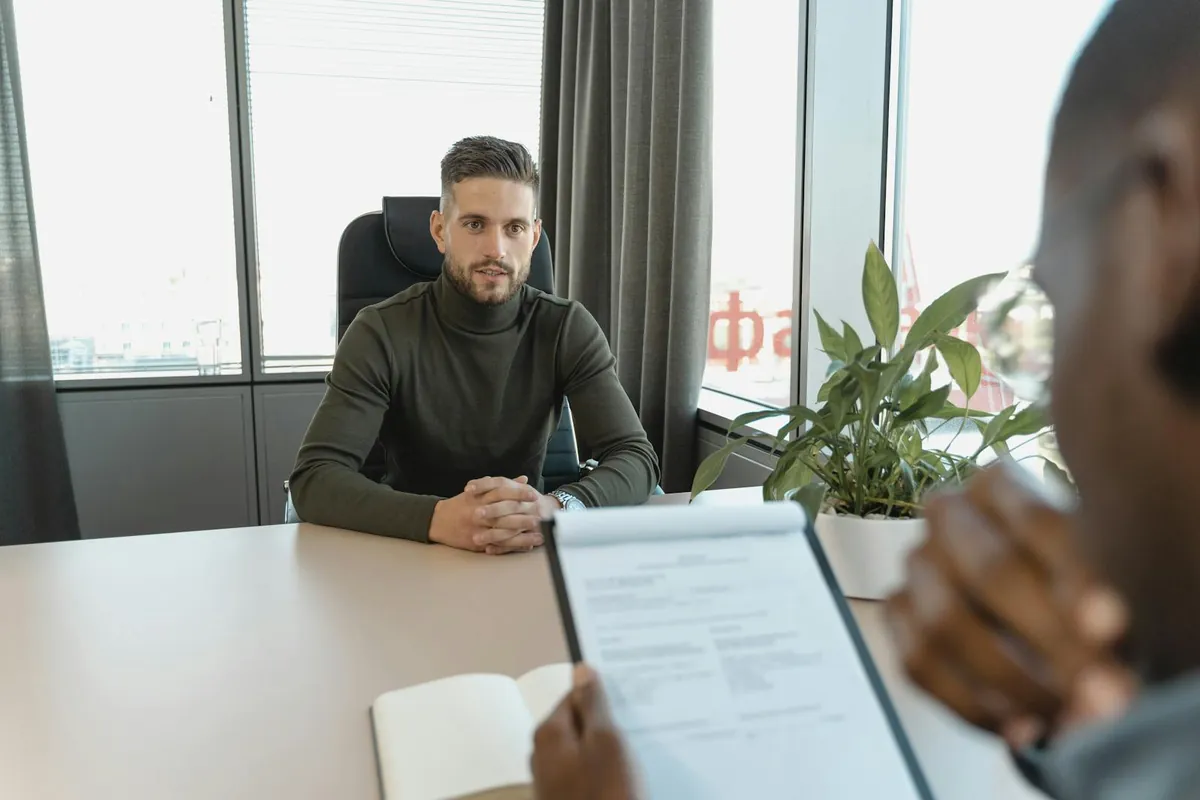
What does a typical UK graduate interview look like in 2026?
For graduate schemes at the Big Four and the banks, the interview funnel runs: online application, situational judgement test, numerical and verbal reasoning, video interview, then a final assessment centre. The 30-to-60 minute final interview you are preparing for is the last hurdle and is heavily competency-led.
For smaller firms and start-ups in London tech, the process is usually shorter — one screening call, one or two competency interviews and sometimes a paid task. The questions are similar but the framing is more conversational.
What does the interviewer actually want to find out?
A hiring manager at a London consultancy told me bluntly in 2023: “I am answering one question. Would I want this person on my team on a difficult Tuesday afternoon?” Everything else — your degree, your model answers, your CV — is supporting evidence.
You are being assessed against three things:
- Can you do the job (technical/competency proof).
- Will you do the job (motivation, fit, retention risk).
- Are you safe (communication, professionalism, judgement under pressure).
How do I master the STAR technique without sounding robotic?
Situation, Task, Action, Result. Almost every UK competency interview uses this framework. The classic failure mode is candidates who memorise scripts and recite them word-perfect. Recruiters spot this instantly.
Instead, prepare six “core” stories from your life that demonstrate different qualities — leadership, teamwork, conflict, failure, initiative, technical problem-solving — and learn to reshape them depending on the question. Each story should have a specific number in it.
Task: My remit was to grow weekly attendance ahead of the British Universities Cross Country in March.
Action: I ran a four-week WhatsApp campaign with member spotlights, introduced a beginner-friendly Tuesday session led by senior runners, and partnered with two local cafés to give members a 20% discount post-run.
Result: Weekly attendance went from 12 to 47 over six weeks — a 290% lift — and the club placed eighth at BUCS, our best result in seven years.
That story can answer “Tell me about a time you led a team”, “Tell me about a time you grew something”, or “Tell me about a time you used data to make a decision.” One story, three uses.

Which competency questions come up most in UK graduate interviews?
From the 800-plus interviews I have run or sat in on, these eight questions appear roughly 70% of the time. Prepare a STAR story for each:
- Tell me about a time you worked with a difficult team member.
- Describe a situation where you had to meet a tight deadline.
- Give me an example of when you used data to influence a decision.
- Tell me about a failure — what happened and what did you learn?
- Describe a time you took the initiative without being asked.
- Tell me about a time you persuaded someone to change their mind.
- Walk me through a complex problem you solved.
- Describe a situation where you received critical feedback.
How do I answer “Why this company?” without sounding generic?
This is the question where most candidates lose the room. “I want to work for PwC because you are a market leader and I admire your culture” — every interviewer has heard that sentence 200 times.
The fix: research three specific things beyond the careers page. A recent news story, a podcast appearance by a senior leader, and one thing about a current project or service line. Weave them into a 90-second answer.
That answer is roughly 90 seconds, demonstrates three specific data points, and signals genuine homework.
What should I ask back at the end?
Never say “no, I’m good thanks.” It signals lack of interest and is read as a small red flag at almost every graduate scheme. Prepare four questions, ask two or three.
- What does success look like for this role in the first 12 months?
- What’s the biggest challenge facing the team in 2026?
- How has the role evolved over the past two years?
- What’s your favourite thing about working here, and what would you change?
That last one is the secret weapon. It signals adult-to-adult conversation rather than candidate-to-employer.
What do UK salary expectations look like for grad roles in 2026?
If they ask “what salary are you expecting?”, give a range based on real market data, not your hopes. Current UK graduate salary bands:
- Big Four (PwC, Deloitte, EY, KPMG) — London: £33–37K base, plus £2–3K joining bonus.
- Investment banking analyst — London: £55–62K base, plus 30–80% bonus.
- FTSE 100 graduate scheme — regional: £28–32K base.
- London SaaS / scale-up — junior: £30–38K base, sometimes with equity.
- US equivalents (Fortune 500): $70–95K, Big Tech engineering $130–180K total comp.

If you are asked, anchor mid-to-high. “Based on what I’ve seen in the market, I’d be looking for somewhere in the £33–36K range for a London role, though I’m flexible if the development opportunity is strong.”
Frequently Asked Questions
How long before the interview should I start preparing?
Five to seven days for a final-stage graduate interview. Two days is enough for an early-round screening. Beyond ten days you start losing freshness — preparation has diminishing returns past a point.
Should I dress formally for a video interview?
Yes, full business dress for all Big Four, banking and consulting graduate interviews, even on Zoom. Smart-casual is acceptable for start-up and tech roles unless the recruiter specifies otherwise. Lighting and audio quality matter more than the outfit — invest in a £30 USB microphone if you can.
What if I don’t know the answer to a technical question?
Say so cleanly and show your reasoning. “I haven’t worked with that specific tool, but my approach would be to start by checking the documentation and reproducing the simplest example before scaling up.” Honest reasoning beats fabricated confidence every time.
How do I follow up after the interview?
Email the interviewer within 24 hours. Three sentences: thank them, reference one specific thing you discussed, restate your interest. Do not write a 500-word essay — recruiters read it on their phone and move on.
What if I get rejected — should I ask for feedback?
Yes, every time. Send a polite one-line reply: “Thanks for letting me know. If you have any specific feedback on what I could improve, I would really value it.” About a third of recruiters will reply with something useful. It is free coaching.
Build the rest of the stack with my UK CV guide and the LinkedIn profile playbook.
